In 2020, many people wiped down their groceries. A new study asks if monkeys also change their habits after a disease scare.
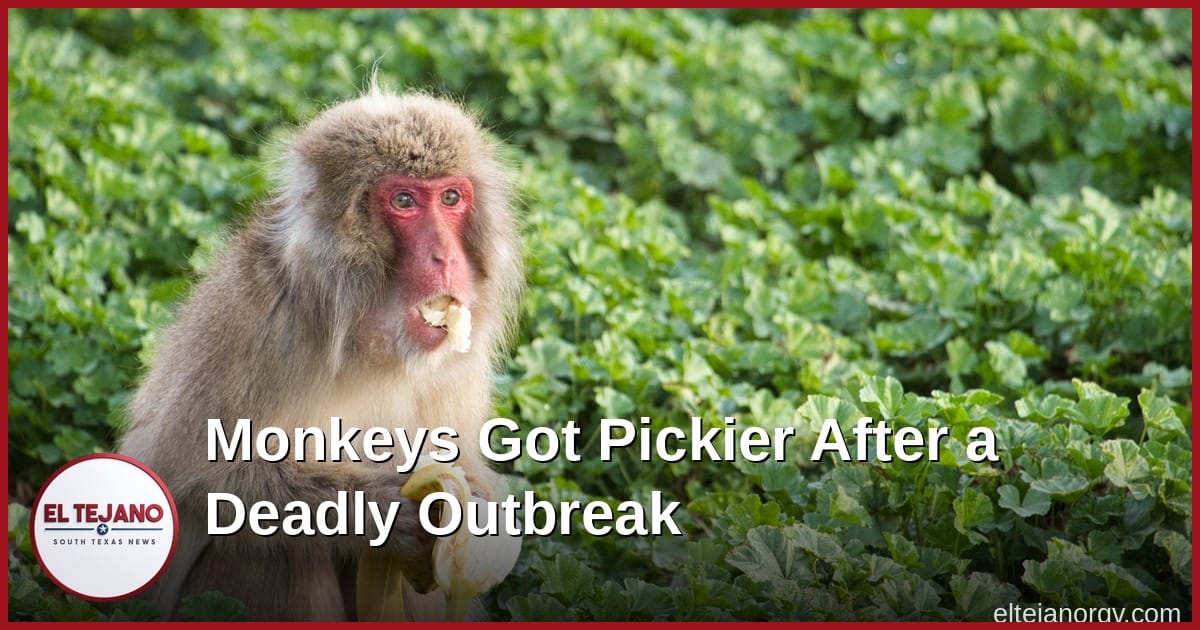
Scientists at UC San Diego studied Japanese macaques. The monkeys live at a primate sanctuary in southern Texas. Some of the monkeys lived through a deadly outbreak in 2020. Those monkeys were later less willing to eat food that looked dirty.
The study came out in a science journal called Royal Society Open Science. Stephan Kaufhold led it. Federico Rossano is a senior author and an associate professor at UC San Diego. Amanda Goguen and Kyliegh Viano also wrote it.
The sanctuary's macaques descend from monkeys brought from Japan to Texas in 1972. In 2020, staff found a virus called simian retrovirus Type II in some of the groups. It can cause an AIDS-like illness. It spreads through bites and scratches. It made some of the monkeys very sick, and some died.
Staff separated the groups. They also added testing and quarantine. That gave the scientists a rare chance. It was a natural experiment. Three groups had lived through the outbreak. One had not.
The team tested 55 macaques. Each monkey could take food from a clean wooden surface. Or it could take food from a surface covered with real monkey feces. The feces were sealed under clear epoxy. The monkeys could see it, but the epoxy blocked the smell and any risk of infection.
Here is what the scientists found. Monkeys from the outbreak groups ate from the dirty-looking surface in 47 percent of the trials. Monkeys from the group with no outbreak did it in 79 percent of the trials.
It did not matter if a monkey had been sick itself. Monkeys that got infected and monkeys that did not acted about the same. The team says that points to living through the outbreak, not the illness itself.
Here is the odd part. The virus did not spread through food. It spread through bites and scratches. The monkeys changed how they treated food anyway. "Groups have histories, and those histories show up in behavior," Kaufhold said.
The team ran a second test. It used 54 macaques from seven species. They grew up in different places. Some were born at a sanctuary. Some came from labs or zoos. Some were once pets. The monkeys born at a sanctuary and raised by their mothers were more careful than the former pets. Kaufhold said one possibility is that the pets never got to learn the habit from other monkeys when young.
Now the limits. This was not an experiment the team set up. The outbreak just happened. Only one group had not lived through it. The main test had 55 monkeys, all from one sanctuary. The team did not measure disgust directly. They also said the monkey results cannot answer whether people change their habits after an outbreak. No people were tested.
The team says monkeys might learn the habit from each other. They have not tested that yet. Future studies could look at whether new monkeys added to a group pick it up.
For now, the study suggests something simple. Monkeys can change how they act after a disease hits their group. That can happen even when they do not know how it spreads.