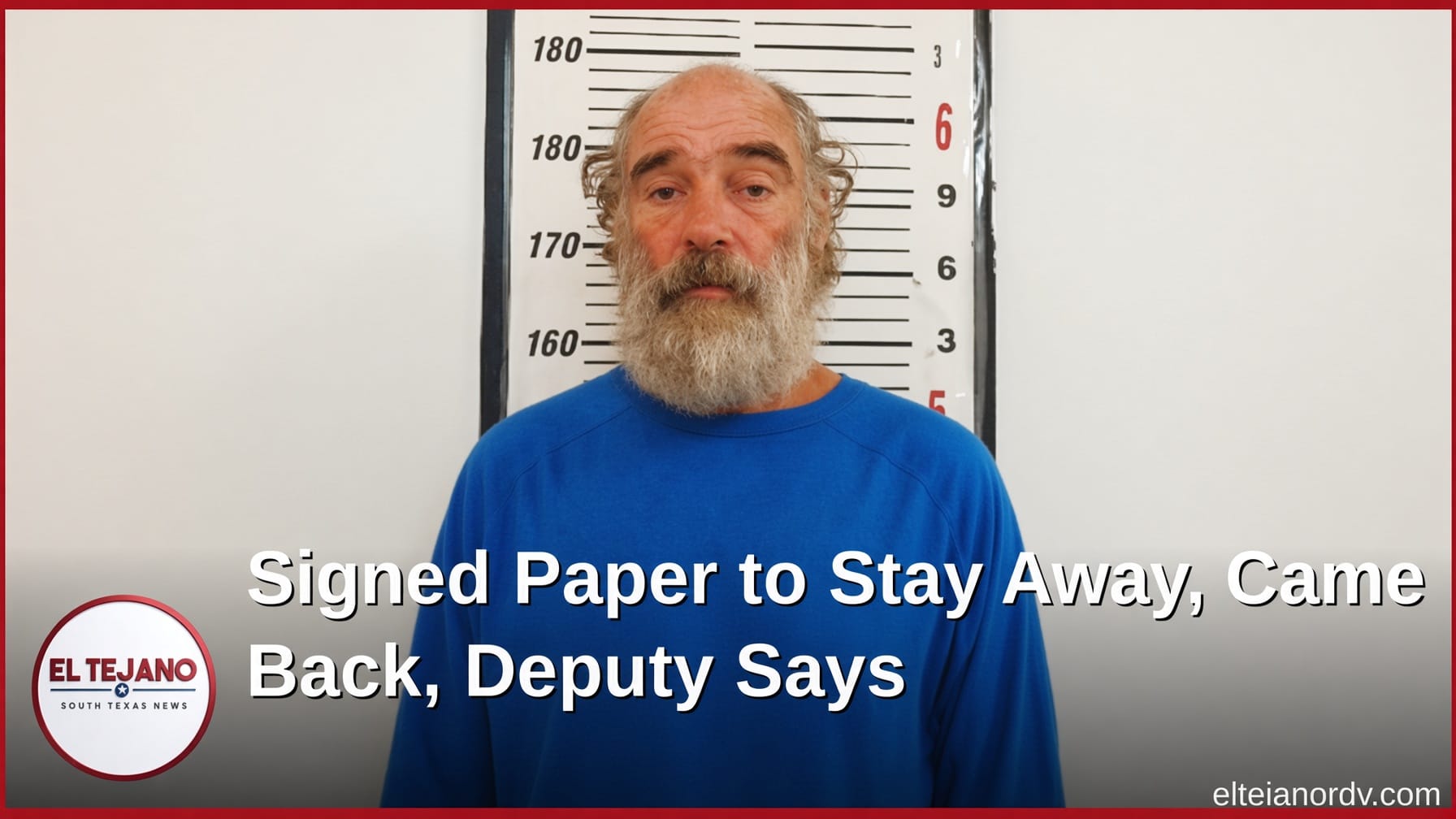
A man signed a document saying he would stay off a property in Starr County. Then, a deputy says, he came back.
Now a sworn complaint charges Nicholos S. Carillo-Gunnels with criminal trespass. The Starr County Sheriff's Office filed it.
Criminal trespass means going onto someone's land after being told to stay away. The complaint lists it as a Class B misdemeanor. That can mean up to 180 days in jail.
These are claims in a complaint. They have not been proved in court.
Deputy Joel Garza signed the complaint. Here is what he wrote.
It was Sunday morning, Aug. 30, 2026. At about 9:31 a.m., Garza was sent to a property in Starr County. The call was about a man who had come onto that property without permission.
The people there told Garza the man had walked off. They said he went toward a second property nearby. They told the deputy what the man was wearing.
Garza went to the second property. He saw a man who matched the clothes.
Before he got there, the deputy got a heads up from sheriff's office dispatchers. They told him the man could go by three different last names. His first name was "Nicholos."
Garza talked to the man. The man said his name was Nicholos, the complaint says.
The deputy wrote that the man knew he had trespassed onto the property the day before. Garza tied that to an earlier case number.
Then the deputy spoke with the owner or caretaker of the second property. That person showed Garza a criminal trespass report from before.
The deputy wrote that the man had signed that report. By signing, the complaint says, he agreed not to come back. He also agreed he could face criminal charges if he did.
At the end, the deputy wrote that the man's name may be Nicholos S. Carillo-Gunnels. That is the name on the charge.
The complaint says he went onto the property without the OK of the owner or caretaker. It says he knew he was not allowed there.
In Texas, a person can be warned to stay away by word of mouth, in writing or by signs. The complaint here points to a signed document.
The complaint leaves some questions open.
It does not say why the man went onto either property. It does not say if he was arrested that day. It does not list a bond or a court date. The copy does not show the date it was sworn.
It also does not say if any charge was filed for the first property.
Everyone is presumed innocent until proved otherwise.