
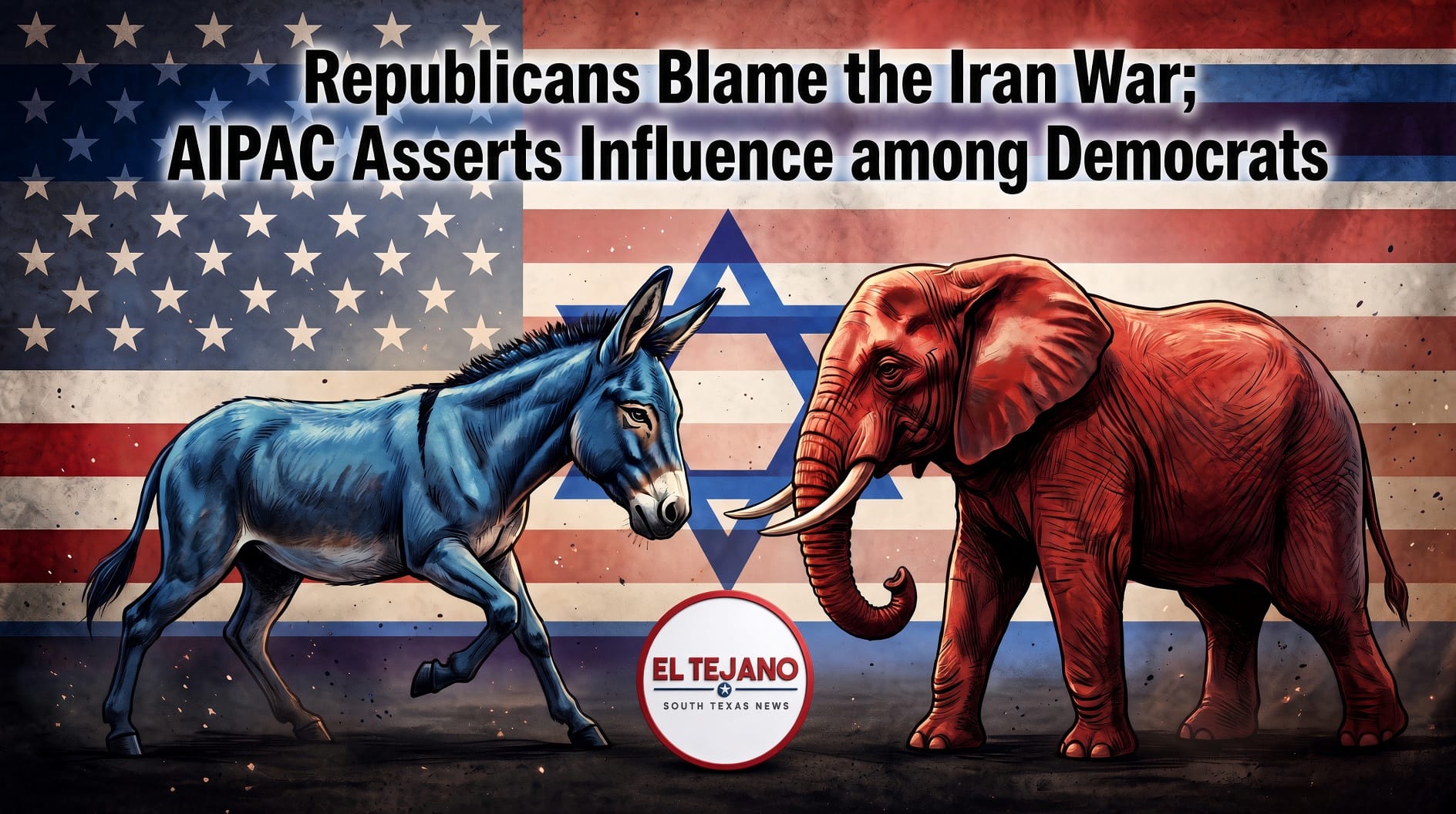
The day after the midterms, a powerful pro-Israel group made a big claim on X. The group is AIPAC, and it posted at 2:30 p.m. on Wednesday, Nov. 4.
AIPAC congratulated "hundreds of pro-Israel Democrats and Republicans" who won their elections the night before. It said more than 234 candidates backed by its members have already won. It said many more races were too close to call.
The post also names two Democrats. They are Senate Democratic Leader Chuck Schumer and House Democratic Leader Hakeem Jeffries. AIPAC cheered the "resounding victories" for their caucuses. A caucus is a party's team of lawmakers.
AIPAC said its members want to do more political work in the years ahead. It said its community will back more Democrats and Republicans who want a strong tie with Israel. The post gave four reasons. It said the tie keeps both countries safe. It said it helps peace. It said it backs democratic values. It said it grows the economy through trade.
The post on X however omits any mention of the Iran war. It does not name Democratic senator elect Abdul El-Sayed from Michigan who has been a vocal critic of AIPAC and the Iran war.
Republicans say it cost their party at the polls. Vice President JD Vance wrote on X on Wednesday, "The reason we lost is the war." Vance asked if losing the Senate for six years was worth it.
For his part, president Trump called Vance's view "largely true." He tied it to higher fuel prices from the war. He also said he would do it again. Locally, Starr County Republicans have quietly admitted what Trump and Vance have publicly stated: the Iran war led to the 2026 midterms political disaster. The Iran war caused gasoline and diesel prices to rise to levels unacceptable to most Americans. In 1992 Democratic political strategist James Carville coined the phrase "It's the economy, stupid". 34 years later Carville's political observation remains true.
AIPAC is the American Israel Public Affairs Committee. It is a pro-Israel lobbying group. A lobbying group tries to sway lawmakers. AIPAC has a PAC that backs candidates. Groups tied to it also spend money.
AIPAC has spoken on the war too. An April 8 news release credited U.S. and Israeli forces with weakening Iran. It praised President Trump. It urged a deal to end Iran's nuclear program.
Schumer and Jeffries both have criticized the Iran war. On Feb. 28, the day the strikes began, Jeffries said Trump must ask Congress for permission to attack Iran. Schumer asked for a briefing right away. However neither Jeffries nor Schumer have publicly questioned or criticized President Trump's decision to attack Iran.
El-Sayed is the Michigan Democrat who won a U.S. Senate seat over Republican Mike Rogers. El-Sayed remains a harsh critic of Israel. AIPAC spent nearly $30 million against him in the August primary, one report says. El-Sayed won the senate race despite the overwhelming money spent to defeat him by AIPAC.
The Reckoning
For months a political civil war has raged between former Trump supporters like Tucker Carlson, Candace Owens, Alex Jones, Megyn Kelly, Joe Kent, and mainstream Republicans. While some Republicans would label Carlson, Owens, and others as "extremists", their influence can no longer be denied. The midterm results seem to indicate their messages about the Iran war got through to voters, at least in part. In the end, many Republican voters voted for Democrats on the ballot.
But Democrats now face a reckoning of their own. The Democratic Party has largely avoided the sort of internal war raging within the Republican Party. On the Democrat side, senator Bernie Sanders and representative Alexandria Ocasio-Cortez (D-NY) remain the few voices highly critical of AIPAC influence in elections. On election night senator-elect El-Sayed told a Detroit crowd, "To the super PACs and special interests who tried to beat us, we are coming for your system of politics. To AIPAC who spent $42 million against us, thank you for giving me the opportunity to beat you twice."
Republicans are no longer alone in their internal struggle over the proper place of foreign influence in American elections. The coming fight within the Democratic Party promises to showcase supporters of El-Sayed, Sanders, and AOC versus pro-Israel (AIPAC) Democrats like Jeffries and Schumer. The 2026 midterms are now in the books. The fallout however could last for years. How will Democrats settle their own opposing views on AIPAC, Israel, and foreign influence in U.S. elections? The American electorate may well end up having to settle the question(s) for both parties.
Source for AIPAC's statement: Post on X on Nov. 4, 2026 @ 2:30 p.m.
https://x.com/AIPAC/status/2118078440196784526