A patient file. November 28, 2019. La Jarra Ranch, Raymondville, Texas.
A nurse's aide wrote down what she saw. The man was doing fine. "Resident in good spirits, just talking about foods he loves to eat," she wrote. "No abnormal behavior noted throughout shift."
That note was true. The bill was not.
Five hours away, in Rosenberg, Texas, a woman named Brandy Kaye Hernandez billed Medicaid $8,160 for that man. She called it a "crisis day." Full emergency care. For a man who wanted to talk about food.
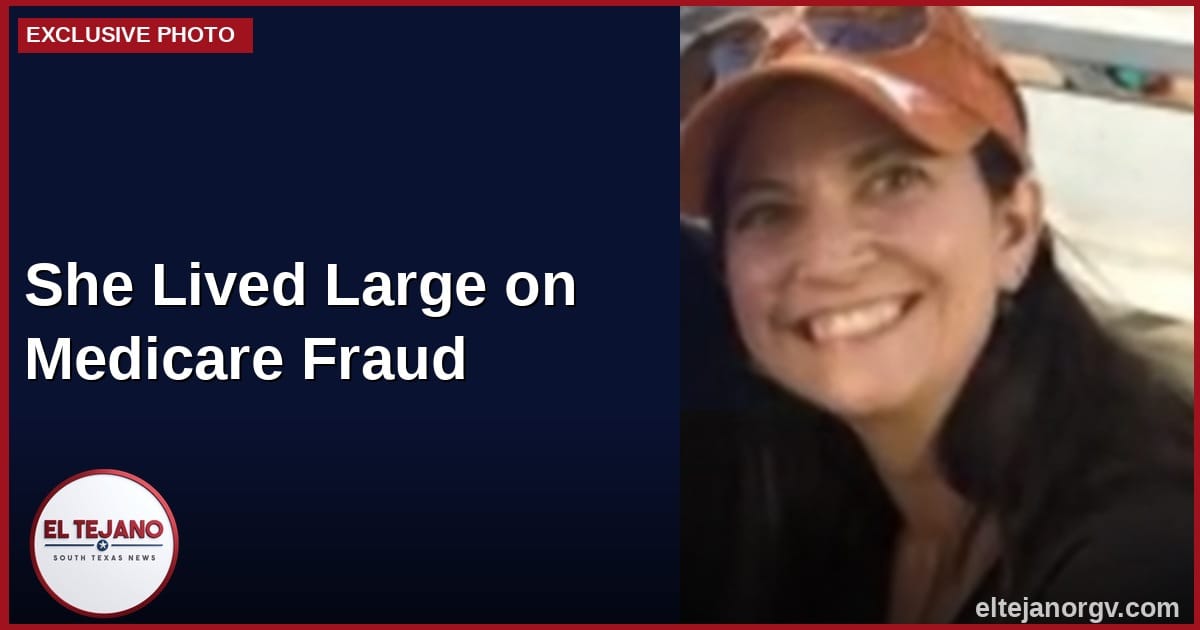
That one note is a window into what federal prosecutors say was one of the most brazen Medicaid frauds in Texas history. A grand jury in Brownsville indicted Hernandez on June 23, 2026. Twenty counts. Healthcare fraud. Money laundering. Conspiracy. The government says she stole $35.9 million from Medicaid over four years. She was arrested in Houston on June 24. Magistrate Judge Yvonne Y. Ho let her go on a $50,000 bond the same day.
El Tejano obtained and reviewed multiple court filings. These include the 22-page federal criminal indictment (Case 1:26-cr-00726, filed June 23, 2026) and the 39-page federal civil forfeiture complaint (Case 1:23-cv-00047, filed March 2023). Also reviewed: a civil suit by her late husband's children in Fort Bend County (Case 23-CCV-072930) and the federal court docket. Those documents tell the full story of what happened at La Jarra Ranch.
HOW IT STARTED
Hernandez, also known as Brandy Castillo and Brandy Leonhardt, started Inspired Behavioral Health, or IBH, on August 22, 2017. She set it up as a nonprofit. The pitch was simple. IBH ran a mental health facility on a ranch near Raymondville. It would take people with mental illness out of the Cameron County jail and give them real care.
She knew how the business worked. Her LinkedIn profile shows she was Executive Vice President of Greene Behavioral Health in Richmond, Texas. She was there from March 2013 to September 2017. Greene Behavioral Health is a residential mental health treatment provider in Fort Bend County. She started IBH in August 2017. She left Greene weeks later.
Before Greene Behavioral Health, Hernandez spent nine years as Fiscal Director at Fort Bend Corps, a nonprofit in Rosenberg, Texas. She also worked more than seven years for Fort Bend County. First as a purchasing clerk, then as an audit assistant.
She was not a stranger to government money. She knew how it flowed. She knew what could be billed and what could be hidden.
Cameron County bought the pitch. Starting in August 2018, the county sent people arrested with mental illness to La Jarra Ranch. Those people agreed to go to the ranch in place of doing jail time. Cameron County paid IBH a daily fee for each person it sent.
IBH also lobbied Fort Bend County to send patients, per the federal forfeiture complaint. It needed bodies. Not to treat them. To bill for them.
The federal forfeiture complaint says Hernandez stacked the place with family, friends, and romantic partners who were underqualified. They had big job titles and rarely worked. She picked them because she thought they would not tell on her.
What patients found at La Jarra Ranch was almost nothing. Per the federal forfeiture filing, they sometimes got a 15-minute video counseling session. Twice a week, a 30-minute group activity with staff who had no medical training. Sometimes a walk around the ranch. That was it.
IBH had one registered nurse at any given time. She showed up a few days each month, per the criminal indictment. But the billing records showed two hours of nurse care for every patient, every single day.
THE BILLING MACHINE
IBH did not record what care it gave. It used pre-set billing templates. Staff copied and pasted those templates across thousands of claims.
A "regular day" template billed for over 20 hours of care per patient per day. Day treatment. Mental health rehab. Medication review. IBH charged Medicaid $4,024 per patient. Medicaid paid $1,320.
A "crisis day" template billed for 24 hours of emergency care. Every hour of the day. IBH charged $8,160. Medicaid paid $3,541. It did not matter if a patient was really in crisis. If IBH wanted more money, it checked the crisis box and sent the bill.
One man was billed for crisis care almost every day for three years. The total bill in his name: $8,429,816. His own chart notes show he was calm on those "crisis" days. November 28, 2019 is one example among many. He was talking about food.
IBH also billed for people who had already left.
Patient VR left the ranch on September 28, 2019. IBH kept billing full crisis care until October 11. The tab for those days: $48,288.
Patient NG left March 18, 2020. IBH billed $30,088 while he was gone through March 26.
Patient IJM left in December 2019. IBH kept billing after that departure. The tab: $28,168.
Patient JM was away November 21 through 27, 2019. IBH billed $20,120 for that stretch. On November 28, the day he got back, his chart read: "Resident in good spirits, just talking about foods he loves to eat." That same day, IBH billed it as a crisis day.
In one month, IBH billed 744 hours of care for a single patient. A 31-day month has exactly 744 hours. They billed every single hour of every single day. The claim on that one month alone topped $250,000.
From August 2018 through November 2022, IBH sent about $114 million in Medicaid claims. It billed two companies: Molina Healthcare and Driscoll Health Plan. IBH received about $36 million of it. All of this came from 59 patients total over four years. That is $1.8 million billed per patient on average.
IBH was the top Medicaid billing mental health provider in all of Texas. With 59 patients.
TAKING WHAT THE PATIENTS HAD
The billing fraud was only part of what went on at the ranch.
IBH told patients to sign over 70% of their SSI checks. SSI is a monthly check the federal government sends to people who are disabled and have little money. If patients would not sign, IBH would not take them in. It screened out anyone who refused.
IBH also took patients' Lone Star Cards. Those are the state food stamp cards. The ranch used that money to buy groceries for the kitchen.
These were not rich people. Many had mental illness. Many had been in jail. Many had no place else to go. They needed a bed and food. IBH offered both in exchange for their government benefits. So they signed.
Robin Matheaus, IBH's vice president and a founding board member, was part of the scheme. She owned 40% of a shell company called TBH Inspired LLC. According to the federal forfeiture complaint, Matheaus pulled more than $2.2 million from it between 2019 and 2021.
WHERE THE MONEY WENT
Once Medicaid money hit IBH's accounts, it moved fast. Hernandez used two shell companies: TBH Inspired LLC and Melody Living Solutions LLC. Federal prosecutors say Hernandez pulled at least $2.5 million from TBH Inspired for herself from 2020 through 2021.
Here is what federal prosecutors say was bought. Every item below comes from the forfeiture complaint El Tejano reviewed:
VEHICLES: Two 2022 Cadillac CT5s. A 2021 GMC Sierra. A 2022 Ford F150 Super Crew. A 2020 GMC Yukon. Two 2019 GMC Yukons. A 2020 Ford Mustang. Two 2022 Silverados. A 2019 Ford Flex. A 2021 motor home Robin Matheaus bought for about $235,000. And a leased 2021 Audi SQ5 with vanity plates that read "CASTILO."
REAL ESTATE: Three homes in Fort Bend County were seized. The addresses on the federal forfeiture list: 6511 Sterling Shores Lane in Rosenberg. 4100 Avenue N in Rosenberg. And 23759 Lively Ferry Lane in Richmond. All in the same suburbs where Hernandez had worked her whole career.
BANK ACCOUNTS AND INVESTMENTS: 15 accounts spread across Texas First Bank, Brazos Valley Schools Credit Union, Prosperity Bank, and Frost Bank. Also 10,000 shares of Agility Bank stock. Federal prosecutors say those shares were bought with fraud money.
When the FBI seized IBH's accounts in November 2022, only $2,899,057.59 was left. IBH had received about $36 million from Medicaid. Less than three million of thirty-six million remained. The rest was gone.
THE DYING HUSBAND
A second case runs alongside the fraud case.
Hernandez was married to Ronald Martin Castillo Sr. He died May 28, 2021 at Nexus Specialty Hospital in Shenandoah, Texas. He was 53. He went in with COVID. It became a heart infection, then blood poisoning. He was on a ventilator. He could not speak. He could not act for himself.
While he was on that ventilator, Hernandez made two bank transfers from his personal account at Brazos Valley Schools Credit Union. She took $133,331.27 from his savings and $8,052.48 from his checking. Total: $141,383.75.
Ronald Sr. had named his son, Ronald Martin Castillo Jr., as the payable-on-death beneficiary on those accounts. The lawsuit alleges Hernandez had no right to those funds.
His two children sued her in Fort Bend County civil court in May 2023. They say she stole their father's money while he was dying. The civil case was put on hold in April 2026. The federal indictment came two months later. The civil case is still open.
WHO WAS WATCHING, AND WHEN
Molina Healthcare sent IBH a letter about odd billing patterns on August 17, 2022. Driscoll Health Plan followed on September 6, 2022. Both cut off payments. The FBI moved in November 2022 and seized IBH's assets.
But IBH had been doing this since August 2018. That is more than four years.
The indictment says Hernandez ignored required fraud and waste training. She refused to use the right forms. She moved the billing office to Rosenberg. That is five hours from the ranch. Nurses in Raymon