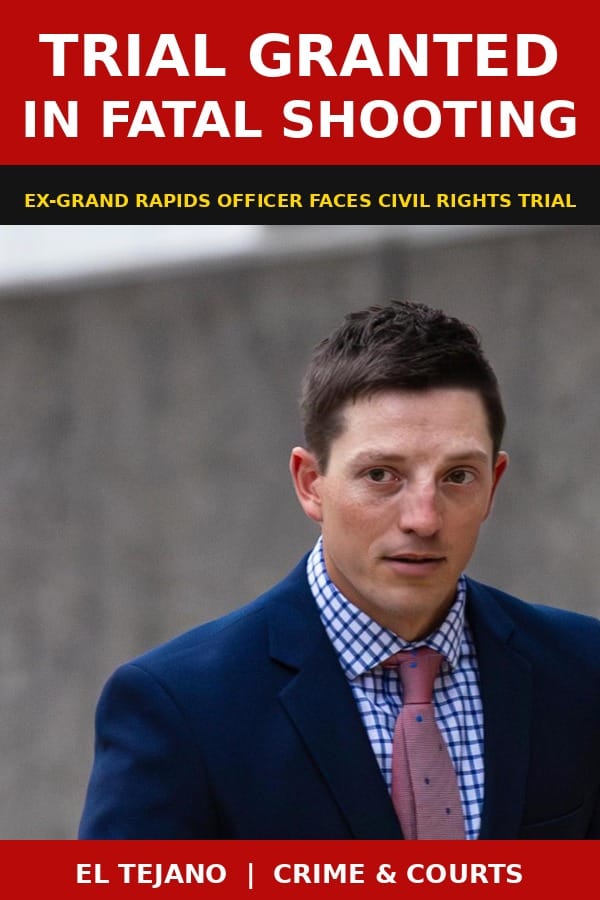
A federal judge says a jury will decide if a Michigan police officer broke the law. The officer shot a Black man in the back of the head. The ruling clears the way for a trial. It could also lead to a settlement. This comes more than four years after the shooting was caught on video.
U.S. District Judge Paul Maloney made the call Thursday. The lawsuit was filed by the family of Patrick Lyoya. Lyoya was a 26 year old Congolese immigrant. Then Grand Rapids officer Christopher Schurr killed him in 2022. The judge would not throw the case out.
This story matters far outside Michigan. Across the country, families lose loved ones to police shootings. Often the criminal case ends without a conviction. But a separate civil case can keep going. This ruling shows how that second path works. It shows what it takes to get a case in front of a jury.
Here is what happened. This comes from the judge's own written order and the video of the shooting. Schurr pulled Lyoya over in a traffic stop in April 2022. Lyoya ran. A foot chase turned into a fight on the ground. The fight lasted more than two minutes. Schurr ended up on top of Lyoya. Then Schurr shot him once in the back of the head.
Schurr says he acted in self defense. He claims Lyoya had grabbed his Taser during the struggle. He says he feared for his life. His lawyers argued he should be protected by qualified immunity. That is a legal shield. It can stop lawsuits against police before they ever reach a jury.
Judge Maloney was not convinced. He wrote that at this stage, he must view the evidence in the family's favor. Under that rule, he said the record shows Schurr shot a man who "posed no threat of violence, held no weapon, and who was under Defendant's physical control." That, the judge wrote, breaks the Fourth Amendment. That part of the Constitution protects people from unreasonable force by police. The judge also said Schurr's story about the Taser fight does not match the video.
Ven Johnson is the lawyer for Lyoya's family. He called the ruling a big win. "Despite every effort to have this case thrown out, the court ruled that the core of Patrick's civil rights claims will move forward," Johnson said. A message left for Schurr's attorney went unanswered.
The shooting already went through one court fight. Michigan prosecutors charged Schurr with second degree murder in 2022. He was fired from the Grand Rapids Police Department after seven years on the job. But in 2025, a Kent County jury could not agree on a verdict. The murder charge against him was dropped.
That is why this civil case matters so much to the family. A hung jury is not the same as being cleared. The standard to convict someone of murder is very high. The standard in a civil lawsuit is lower. Losing the criminal case does not mean the family loses the fight for accountability.
It helps to understand what Thursday's ruling means, and what it does not mean. The judge did not rule that Schurr is guilty of anything. He ruled that the family's evidence is strong. He said a jury, not a judge, should decide what happened. Schurr still gets to make his case at trial.
What happens next is a trial or a settlement. Civil rights cases like this one often settle once a judge denies qualified immunity. If it does not settle, a jury in federal court will hear the evidence. They will decide if Schurr used excessive, unreasonable force. No trial date has been set. Police accountability groups are watching the case closely. So are other police departments that train officers on how much force is allowed during a struggle.