
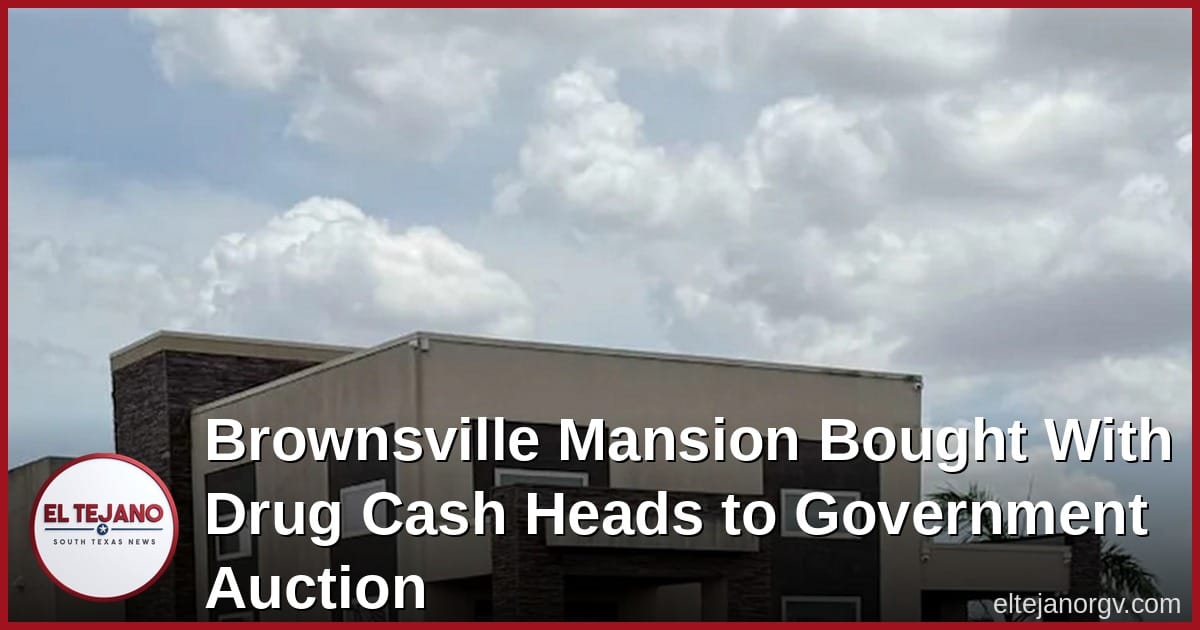
A big house in Brownsville is about to go up for sale. The government will run the sale. Federal agents say a drug boss used dirty money to buy and fix up the home.
The house sits near the border with Mexico. It has six bedrooms and four bathrooms. It covers more than 6,900 square feet. It also has a pool and a pool house.
A federal judge just signed an order to take the house away for good. This is called civil asset forfeiture. In plain terms, that means the government can take stuff tied to a crime. It can do this even if no one goes to trial. This case shows how drug cash can end up buying nice homes right here in South Texas.
The man who owned the house was Juan de Dios Gomez-Gonzalez. Federal agents say he ran a drug ring from about 2009 to 2023. They say he brought in tons of cocaine from Mexico. The drugs went to Texas and other states. Those states include California, Nevada, North Carolina, Indiana, and Florida.
Gomez-Gonzalez never faced trial. He died in a shootout in Mexico in September 2023. That was before agents could arrest him. They wanted to bring him back to the United States to face charges.
Court papers say Gomez-Gonzalez bought the Brownsville house in February 2013. He paid $330,000 for it. Agents say he later used drug money to fix it up big time. He added a pool and a pool house. He also did a full renovation. The house is now worth about $1.7 million.
Agents say the money moved through firms in Matamoros, Mexico. One firm was a construction company called Palmas Construction. Matamoros sits just across the river from Brownsville. It is turf long held by the Gulf Cartel. This cartel is one of Mexico's most powerful and most violent drug crime groups.
Court records call Gomez-Gonzalez a major cocaine supplier. They say he was "linked to multiple cartels." The records do not name the Gulf Cartel on its own. But the Matamoros money trail points straight to Gulf Cartel turf. That is why this case has South Texas talking.
Cases like this one happen often along the border. Federal agents use forfeiture to hit drug groups where it hurts. That means their wallets and their real estate. Homeland Security Investigations led the probe. That agency is part of ICE. Agents traced Gomez-Gonzalez and his money trail step by step.
Prosecutors filed the forfeiture case in 2025. Nobody stepped up to fight for the house in court. No family member filed a claim. No business filed a claim either. That let the case move forward with no fight.
U.S. District Judge Fernando Rodriguez Jr. signed the final forfeiture order on Wednesday, May 6, 2026. That order clears the way for a government auction. No auction date has been set yet. The property stays under federal control until then.
Acting U.S. Attorney John G.E. Marck oversaw the case. Prosecutors Tyler Foster and Zachary Blackmon handled the forfeiture side. Prosecutor Lance Watt worked the criminal case against Gomez-Gonzalez before his death.
Once the auction happens, the sale money goes to the U.S. government. That is how civil forfeiture cases usually end. The property gets sold, and the cash goes into federal accounts.
For now, the mansion sits empty. It stands as a stark reminder. Drug money can travel far. It can go from cocaine sold on the street to a pool house in Brownsville. South Texas readers along the border know this story well. Cartel cash does not always stay in Mexico. Sometimes it buys a mansion just a few miles from home.