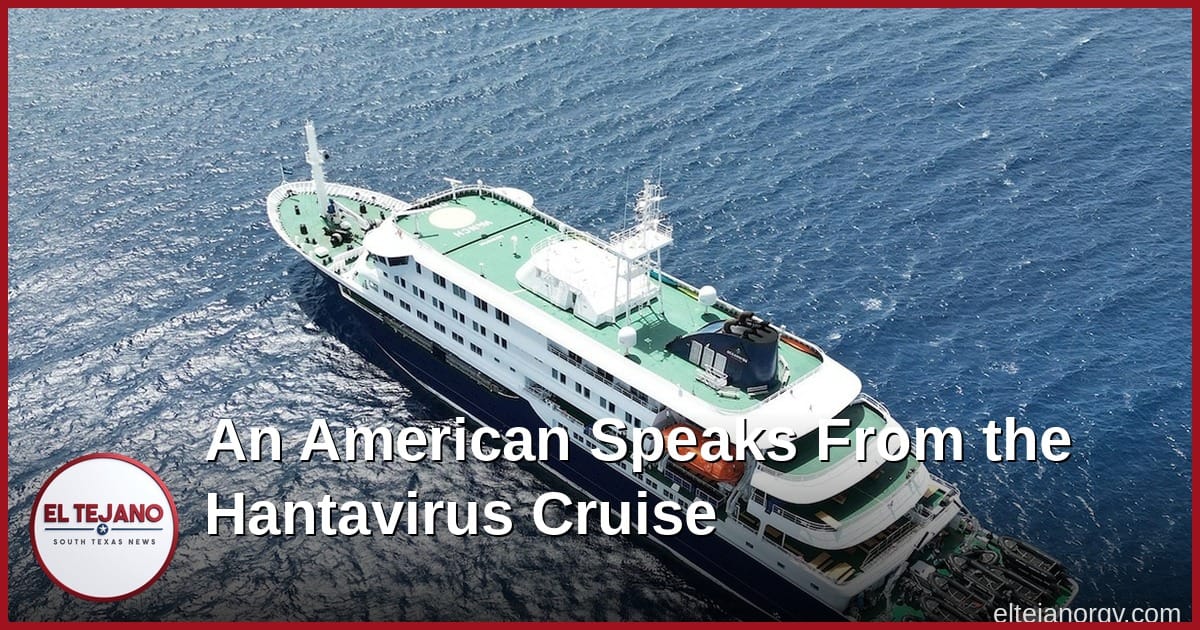
A Boston photographer sat in his cabin on a ship stuck at sea. Three people on board were dead. He turned on his camera anyway.
Jake Rosmarin was one of 18 Americans on the MV Hondius. The ship is run by Oceanwide Expeditions, a Dutch travel company. It left Ushuaia, Argentina on April 1. It was headed to Antarctica and small islands in the South Atlantic.
By early May the trip had turned into a health scare. ABC News reported 149 people were still on board. They came from 23 countries. Rosmarin later said Cape Verde would not let them dock.
Rosmarin posted a video to Instagram. He said he wrote his words down first.
"I am currently on board the MV Hondius, and what's happening right now is very real for all of us here. We're not just a story, we're not just headlines. We're people, people with families, with lives, with people waiting for us at home."
"There's a lot of uncertainty, and that's the hardest part. All we want right now is to feel safe, to have clarity and to get home."
The bug was hantavirus. Officials in South Africa confirmed it in passengers, ABC News reported.
Hantavirus is not new. The CDC says people catch it from rats and mice. The germ rides in their pee, droppings and spit. Breathing dust from a nest can be enough. Most kinds do not pass from person to person.
This kind did. It was the Andes virus. The CDC says it is the only hantavirus known to spread between people. That takes close contact.
The illness starts like the flu. People feel tired. They run a fever. Their muscles ache. Days later the lungs fill with fluid. A cough and short breath follow. The CDC says up to 38 out of 100 people who reach that stage die. Signs can show up one to eight weeks after contact.
Three people died on this trip. A 70-year-old Dutch man died on the ship on April 11. His death was first blamed on natural causes. His wife, 69, got off at Saint Helena. She died in a hospital in Johannesburg on April 26. A German woman died on the ship on May 2. None of the three have been named in news reports.
About 30 to 40 people got off at Saint Helena on April 24. They went home to at least 12 countries. Contact tracing was not set up yet, NPR reported. Health teams in several countries then had to track them down. Saint Helena kept its higher risk contacts apart for 45 days.
The ship reached Spain's Canary Islands on May 10. People got off a few at a time, sorted by country. Spain's health and interior ministers watched. So did the head of the World Health Organization, Dr. Tedros Adhanom Ghebreyesus.
"This is not another COVID, and the risk to the public is low," Tedros said.
Eighteen Americans and one dual citizen got off there. The CDC sent a plane. Sixteen went to the University of Nebraska Medical Center in Omaha. Two flew to Atlanta.
Rosmarin was in the Nebraska group. He never tested positive. He never got sick. He talked to TODAY from quarantine.
"I think like anyone, when you hear a virus you may not know about, you Google it, and you know, probably when you Google this virus, it's some very scary statistics," he said.
"It wasn't until we arrived in the Canary Islands and I was able to get off the ship that I felt a bit of relief."
He also praised the crew. In one Instagram post he said Oceanwide Expeditions and the whole crew had handled a hard job with care.
The outbreak is over. WHO called it done on July 2. The final count was 13 cases and 3 deaths. Twelve cases were confirmed. One was probable. Two of the deaths were confirmed as hantavirus. The third was listed as probable.
"Today, the final contact of a person exposed to hantavirus on the cruise ship MV Hondius completed their quarantine period, tested negative and returned home," Tedros said.
WHO said the outbreak no longer poses a public health risk. Teams watched 317 higher risk contacts for 42 days. No new case turned up. The ship was cleaned and cleared to sail again on May 30.
Where did it start? WHO says the first sick passenger likely caught it on land. That passenger had traveled in Argentina, Chile and Uruguay before boarding.
WHO says 21 countries will now study the outbreak together. They want better tests, better drugs and one day a shot.
For readers here, the plain part still holds. The CDC says rodent control is the main way to stop hantavirus. It tells people to keep wild rats and mice out of the home.