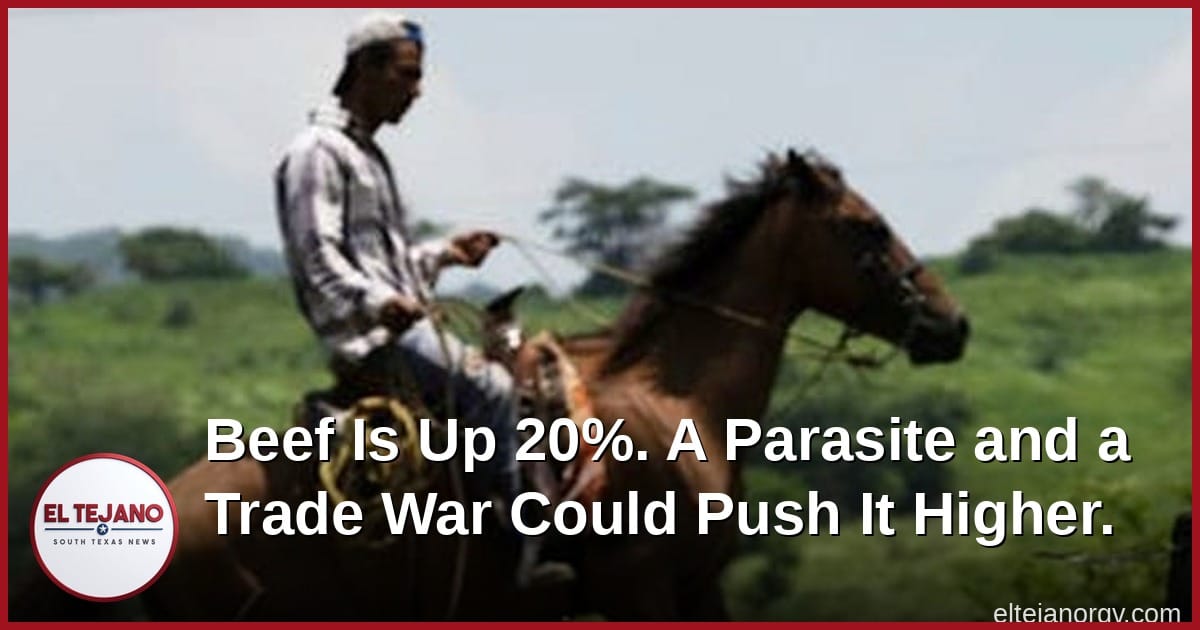
Your grocery bill is not lying to you. Ground beef has gone up more than 20 percent since January 2025. And two things are about to make it worse.
First: a flesh-eating parasite is spreading through Texas cattle. Second: a big trade deal between the US, Mexico, and Canada runs out in 12 days.
South Texas is in the middle of both.
The New World Screwworm is a parasite. It gets into living animals and eats them alive from the inside. As of June 11, Texas has six confirmed cases. The quarantine zone now covers Webb County. That is Laredo. That is right on the Rio Grande, deep in South Texas ranch country.
Ranchers inside the zone cannot move their cattle without help from the state. Every animal leaving the zone needs an inspection and a paper to go with it.
The screwworm came from Mexico. It has been killing cattle there since late 2024. Mexico sends young cattle to US feedlots every year. Those cattle grow up here, get fat, and go to slaughter. That pipeline is almost gone. Young cattle coming from Mexico fell by more than 80 percent this year.
Now Canada has banned livestock from Texas and New Mexico. Mexico has banned most US livestock from going south. Our two biggest trade partners both shut the door on Texas cattle.
The US cow herd is also at its lowest point since the 1950s. Years of drought cut the herds down. Now the screwworm is adding more pain on top of that.
Then there is the trade deal.
The USMCA is the agreement that lets beef move between the US, Mexico, and Canada without big taxes or fees. It must be renewed by July 1, 2026. That is 12 days from now.
President Trump warned this week that the US might walk away from the deal. Canada is not even at the table yet. US and Mexican officials met June 16 and 17. Nothing is settled.
If the deal dies, Mexico and Canada can put their own taxes on US beef. They can add more inspections, more paperwork, more slowdowns at the border. Cattle often cross the border more than once before they become meat. Small delays create big problems fast. Less cattle moving means less beef in stores. Less beef means higher prices.
One Texas rancher said it simply.
"We can't lose demand for our products. Look what happened with soybeans last year when China quit buying," the rancher said.
US farm groups are pushing hard for Trump to keep the deal. They say the USMCA has helped ranchers on both sides of the border. But Trump makes the final call.
For families in the Valley, this is not far away. It shows up at the meat counter at HEB right now. It will show up even more if either problem gets worse.
Webb County is in the quarantine zone. Starr, Hidalgo, and other South Texas counties are close to it. Ranchers here already feel the screwworm pressure. Consumers here already feel the 20 percent price jump.
The July 1 deadline on the trade deal may be the most important date for beef prices this year.
If you have cattle and see wounds that do not heal, call the USDA at 1-800-635-6953. The Texas Animal Health Commission handles the quarantine zone rules.
Watch this story closely. It is moving fast.