Store shelves keep clearing out this year. Lettuce. Eggs. Jalapenos. Frozen berries. It feels like a new food recall pops up every week in 2026. But the real numbers tell a different story.
By July 31, 2026, the U.S. had 122 food recalls. That is fewer than the 135 recalls in the same months of 2025. It is also fewer than the 146 recalls in that same stretch back in 2024. This data comes from the Poynter Institute. So 2026 is not a record year for recall counts. It just feels that way.
Food safety experts point to two things happening at once. Some recalls this year were very serious. And deep cuts to government food safety workers have people on edge. They worry about problems that are not getting caught.
One big recall hit iceberg lettuce from Taylor Farms. A tiny parasite called cyclospora spread through it. More than 9,000 people got sick. That outbreak shook a lot of trust in fresh produce.
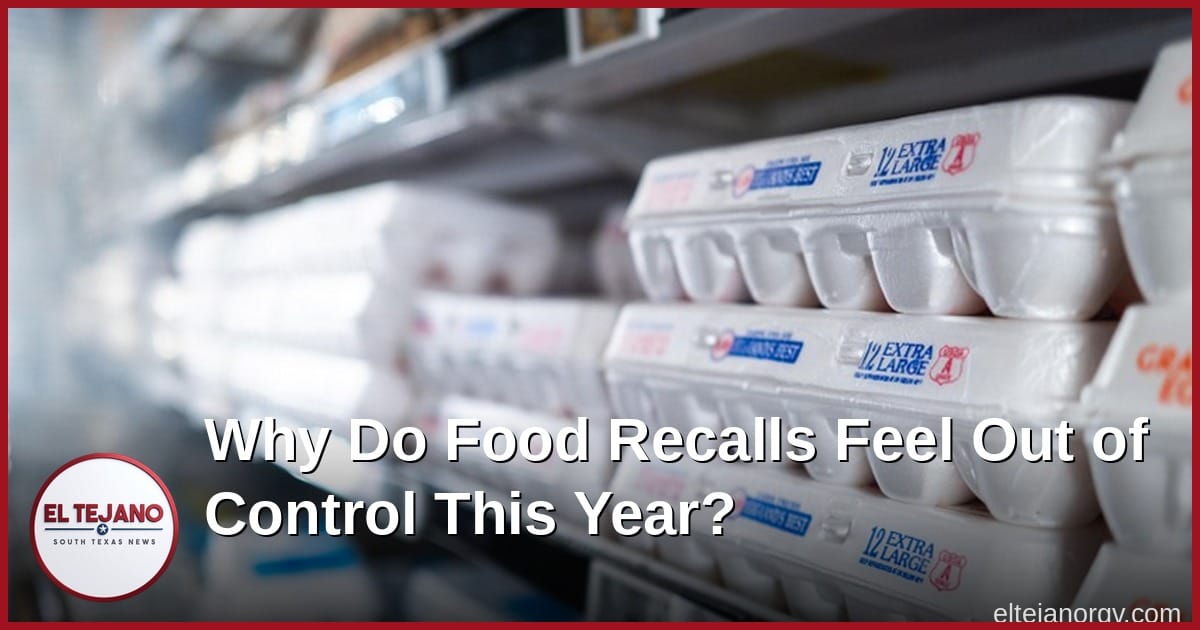
Another recall pulled more than 1 million eggs off shelves. The eggs came from Midwest Poultry Services. They were sold at Kroger stores. Salmonella was the problem.
Taylor Farms also had to recall jalapeno products this year. A company called Coast Citrus Distributors sold them. Salmonella turned up again. El Tejano readers may remember stores across the Rio Grande Valley pulling jalapenos off shelves because of that recall.
Other foods got recalled too. Publix pulled frozen blueberries and mixed berries after tests found E. coli. Outshine fruit bars got pulled over tiny glass pieces inside the wrapper. Even some dog food and eye drops got recalled for contamination.
Darin Detwiler studies food safety at Northeastern University. He said recall activity has been high this year. But he said it is too early to know if 2026 will beat 2025's full total once the year ends.
"This is where recall fatigue can become trust fatigue," Detwiler said. He means people may start to ignore recall warnings. Then they may stop trusting the food system, even when it works right.
Not every expert agrees the risk has grown. Edward Dudley teaches food science at Penn State. He said more news about recalls "doesn't necessarily reflect a concerning uptick in risk." In plain words, we may just be hearing about recalls more. We may not be getting more of them.
Money cuts may explain why people feel less safe. The Food and Drug Administration's budget dropped by 271 million dollars from last year. The agency lost more than 4,300 workers in 2025 and 2026. The CDC cut more than 2,800 jobs in that same time.
Those cuts hit food safety tracking hard. The CDC used to track germs like cyclospora, listeria, and shigella closely. Some of that tracking got cut back. A new rule was set to help companies trace bad food faster. It was set to start in January 2026. Regulators pushed that start date back to 2028.
Fewer inspectors do not mean the food on shelves is unsafe right now. But it does mean fewer people are watching. Problems could take longer to catch when they happen.
Food safety experts give simple advice. Keep checking recall notices. Watch for lettuce, eggs, and fresh produce, since those had the biggest problems this year. Wash produce before you eat it. Check lot numbers on eggs and packaged food if a recall comes out.
Here is the bottom line experts point to. The recall count itself is not breaking records in 2026. What changed is how loud each recall sounds, and how many fewer government workers are watching to catch the next one before it spreads.