
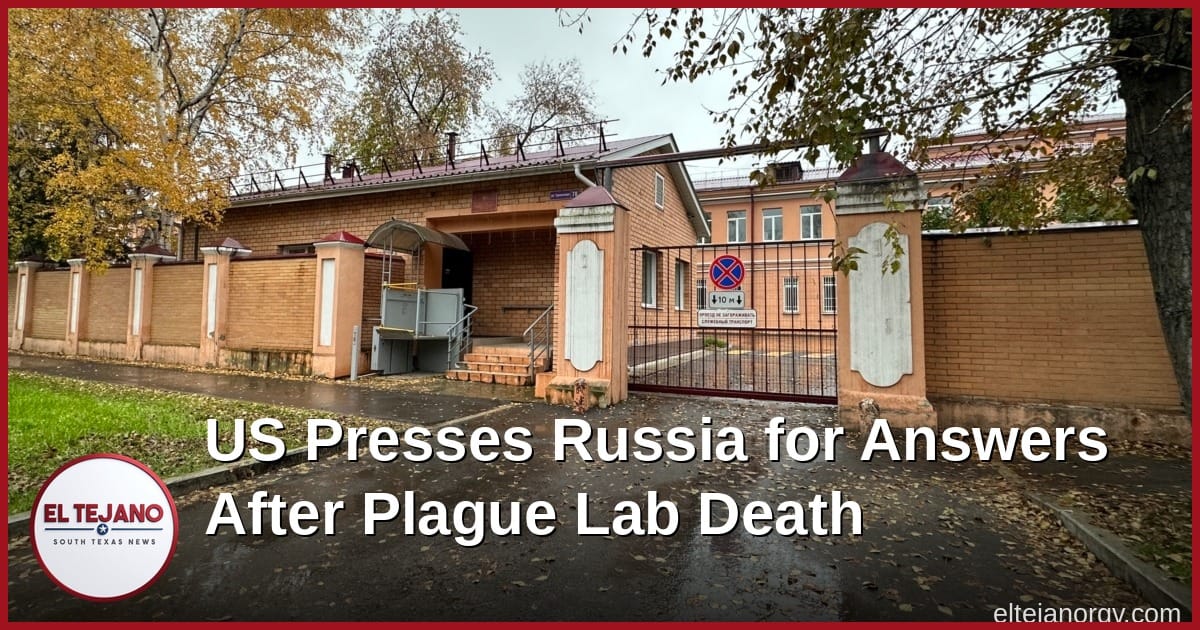
The United States wants answers from Russia. A worker at a Russian lab that studies plague has died. People outside Russia still do not know what killed her.
The lab is the Irkutsk Anti-Plague Research Institute. It is in Shelekhov, a town in southern Siberia. The U.S. State Department said it knows of "reports of a fatal case of suspected pneumonic plague" there. The word "suspected" matters. Russia has not said it was plague.
Here is what Russia says. Its health watchdog is called Rospotrebnadzor. It says the woman had pneumonia from an unknown cause. It says tests found no germs linked to her work. It says it found no lab accidents with dangerous germs.
The agency also tested people who were near her. It found two cases of Covid-19. It found two cases of a common cold virus. It says it found no other germs.
Igor Kobzev is the governor of the Irkutsk region. He said no germs tied to her work were found. He said no other lab workers had asked for medical help in recent days.
Russia also told the World Health Organization that no plague case has been recorded in the region. The WHO said it is still waiting to learn what germ caused the pneumonia.
Here is what the U.S. says. The State Department said many details are not confirmed. It asked Russia to "share accurate information quickly and openly." On Tuesday, a spokesperson said the U.S. had officially asked Russia for more information. A U.S. official said a formal note went to Russia early Wednesday. It is called a demarche. The official said it reminds Russia to follow world health rules.
Secretary of State Marco Rubio spoke on Monday. "I don't think it's cause for alarm, but it is cause for focus," he said. On Tuesday, he said Russia should share more. He said it would be reckless to guess with so little information.
President Trump said the U.S. is willing to help Russia. He said he had a call set with President Putin. On Wednesday, the Kremlin said no call has been set up. On Wednesday, Kremlin spokesman Dmitry Peskov said most media reports on the case are false. He told people to rely on Rospotrebnadzor.
The CDC said it sees no sign of a broader threat to the United States. The State Department said Americans have long been told not to travel to Russia.
Some things are not confirmed. Local reports in Siberia say the woman went to the hospital around September 29. They say she died early on October 2. Reports differ on some dates. One regional report says she broke a test tube with plague germs on September 25. Russian officials have not confirmed that. Rospotrebnadzor says no lab accident was found. Early reports also said she had traveled. The head of Buryatia, a nearby region, said she had not visited it.
Some reports mention a second worker with pneumonia. The WHO asked Russia about it. Local officials have not confirmed a second case.
Russian media say nearly 200 people who had contact with her are under medical watch. Maksim Modin is the mayor of the Shelekhov district. He said a hospital was closed for quarantine. It is the one where she is said to have been treated.
Why does this lab draw questions? The State Department said in an April 2025 report that it believes Russia runs a germ weapons program. Russia denies that. It says such labs build defenses against germs.
Nothing made public so far shows that the Irkutsk lab made plague as a weapon. Nothing shows that this death is tied to such a program.
What is pneumonic plague? The CDC says it is the lung form of plague. It can pass from person to person through droplets in the air. The State Department said common antibiotics can treat plague, especially if treatment starts early. The CDC says the U.S. has about seven plague cases a year.
The institute says it was founded in 1934 to fight plague. It also studies other dangerous diseases, like cholera and anthrax.
The U.S. says it is talking with other countries to share information. For now, the key question has no public answer. What germ caused the woman's pneumonia?