
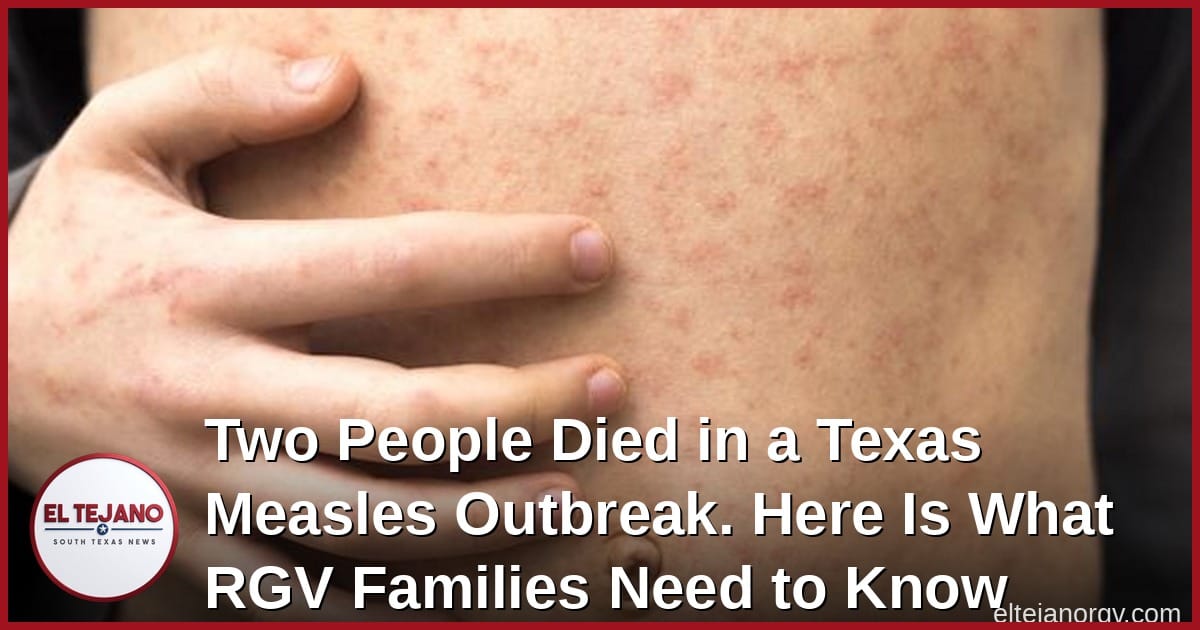
Two people died from measles in West Texas in 2025. More than 760 others got sick. Ninety-nine went to the hospital.
This did not happen 100 years ago. It happened last year, in our own state.
The outbreak started January 29, 2025, in Gaines County. That is the far western edge of Texas, near the New Mexico border. One unvaccinated child came down with measles. Then it spread fast.
By the time health officials got it under control, 762 people had gotten sick. Almost all of them were unvaccinated or had unknown vaccination status. Only 6 out of 762 had gotten at least one MMR shot. Most of the sick were kids. About 18% had to go to the hospital.
Why did it spread so fast? Vaccination rates in the area were low. Some schools had MMR coverage as low as 77%. The state of Texas overall sits at 93.2% coverage. Measles is one of the most contagious diseases on earth. When too many people are unvaccinated, the virus finds them.
Health officials held 33 vaccination clinics and 16 testing clinics to fight the outbreak. Even with all that work, only about 275 MMR shots were given. Many people in the community did not trust outside health agencies. They stayed away. Researchers believe the real number of sick people was even higher than 762. Many cases were never reported.
A second outbreak hit a school in South Carolina around the same time. The CDC studied that one too. Researchers say it was one of the largest school-based measles outbreaks in years.
Both reports said the same thing: keeping vaccination rates high is the best way to stop measles and keep schools open.
The MMR vaccine protects against measles, mumps, and rubella. Two doses are recommended. When both doses are given, the shot is about 97% effective. It has been around for decades. It is safe.
Measles was declared gone from the United States in 2000. It did not come back because of some new bug. It came back because vaccination rates dropped in some communities.
Why does this matter to South Texas and the Rio Grande Valley?
Our region has large, close-knit communities. We have busy border crossings. Some areas here have lower vaccination coverage than the state average. Measles spreads through the air. You do not have to touch an infected person to catch it. You do not have to be in the same room at the same time. That is how contagious it is.
The risk is not about who you are. It is about whether enough people around you are vaccinated. When rates drop, the virus moves.
Here is what families can do right now.
Check your kids' shot records. The MMR vaccine is given at 12 to 15 months, then again at 4 to 6 years. If your child missed one or both doses, call your doctor or visit a local health clinic. In the RGV, shots are available at low or no cost for children who qualify.
Adults who are not sure if they were vaccinated can get the shot too. One dose is enough for most adults. Two doses are recommended for college students, health workers, and travelers.
Measles starts like a bad cold. Fever, runny nose, cough, red eyes. Then a rash shows up, usually on the face first. It spreads down the body. If your child has those signs, call your doctor before going in. Do not walk into a waiting room. You could give the virus to others, including babies too young to be vaccinated.
The CDC reports on both outbreaks are public. The bottom line from researchers is simple: the vaccine works. The outbreaks we saw in 2025 were preventable.
All facts come from the CDC and published research reports.