In the Rio Grande Valley, crossing the bridge is part of daily life. People go to Mexico to visit family. They shop. They see the doctor. They come back home. Many carry a green card. They are legal residents of the U.S.
On Monday, the Supreme Court gave those residents a warning.
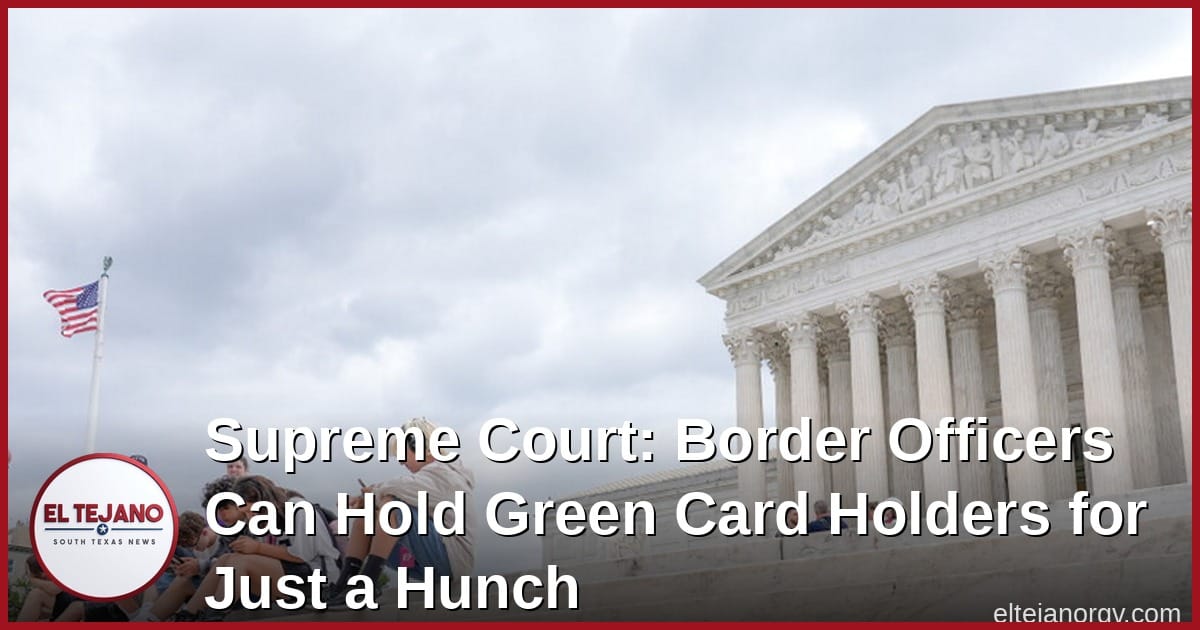
The court ruled 6 to 3 for the Trump team. The ruling says a border officer can put a green card holder in parole status with just a hunch that the person committed a crime. No court date needed. No guilty verdict. Just a hunch.
That matters in border towns like Starr County. Thousands of legal residents cross back and forth every week.
The case was about a man named Muk Choi Lau. He was a legal resident. In 2012, he flew back from a trip to China. When he landed at JFK Airport, a border officer stopped him. That case was at an airport, not a bridge. But the ruling covers every port of entry. That includes land bridges like the ones in Starr County. The officer had heard Lau was accused of a crime in New Jersey.
The officer put Lau in parole status. That means the law treats you as if you never entered the U.S. legally. It did not matter that Lau had a green card. He had not been found guilty of anything yet.
Lau later pleaded guilty to selling fake clothes. The government used his parole status to try to send him back. He said the officer had no right to put him there.
The Supreme Court said the officer was right.
Justice Clarence Thomas wrote the ruling. He said officers do not need strong proof of a crime. A hunch is enough to change your status at the bridge.
The three liberal justices voted no. Justice Ketanji Brown Jackson wrote the dissent. She said the ruling puts green card holders in limbo before any guilty finding.
"I worry that the Court has now handed the Government a massive blank check," Jackson wrote.
This ruling lands at a big moment. President Trump is pushing hard on all things related to the border. His team said a hunch about a crime is enough to hold a legal resident when they enter the country. The court said yes.
For Starr County families, the question is very real. What if you have an old ticket? An arrest from years ago? A charge that was dropped? A border officer who finds that when you cross back from Mexico can now change your legal status right then.
That is not being sent back right away. But it changes your standing. It gives the government a shorter path to start a removal case.
A group that backed the ruling said it was right. "People who abuse the right to be a legal resident should face results," said a group tied to former Vice President Mike Pence.
A group on the other side said the ruling gives the government new tools to pull green cards in ways the law never meant.
The court is also looking at other big border cases. Trump wants to end birth citizen status for children born here. He wants tougher asylum rules. He also wants to end short-term protection for people who fled war or disaster.
In recent years, the court has taken up many big border cases. Each one changes the rules in border towns. People in Roma, Rio Grande City, Mission, and McAllen feel every one of them.
Thousands of people in the Rio Grande Valley are green card holders. Many cross the bridge all the time. Some have old records. Old arrests. Cases they put behind them years ago.
After Monday, when they cross back, the officer at the booth has more power. One hunch can change your status on the spot.
Lawyers say the fight is not over.