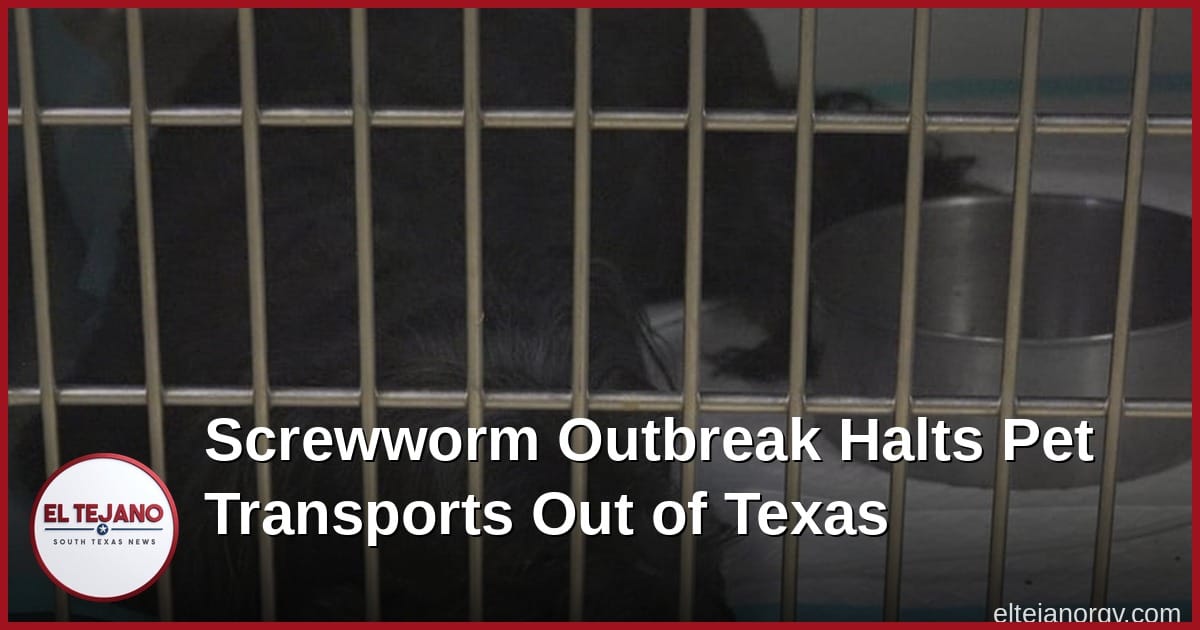
A tiny bug is stopping pet adoptions in Texas. Forty four states now block or limit pet moves out of the state. The reason is the New World screwworm. It is a pest that can hurt any warm blooded animal.
The screwworm scare began with cattle. Now it is hurting dogs and cats too. Shelters in Texas can no longer send pets to other states. That means more animals stuck in full shelters. This is true near the Rio Grande Valley too.
The USDA found the first U.S. screwworm case in 60 years. That was on June 3, 2026. A three week old calf in Zavala County, Texas tested positive. The bug's eggs were found near the calf's belly button. Zavala County is in South Texas. It is not far from the Valley.
Five days later, the USDA found two more cases. One was a calf in La Salle County. The other was a dog in Andrews County. That dog had just come back from a trip to Mexico. This shows the pest can travel with pets, not just cattle.
Screwworm maggots dig into open cuts on live animals. They can get into a cut, a scrape, or a newborn animal's belly button. The harm can turn deadly fast if it is not treated. The pest can also hurt wildlife. In rare cases, it can hurt people too.
Dr. Merten Pearson works at Noah's Ark Pet Hospital. He said moving animals is the biggest risk right now. "Physical movement of the animals is our greatest enemy in the New World screwworm fight right now," Pearson said. "It's not that the fly flies from here in North Dakota. It gets on a truck with a cow or in a car with a dog."
Florida went further than most states. It banned all rescue dog and cat imports from Texas. It also banned imports from New Mexico. The other 43 states have their own limits too.
The bans are hitting shelters hard. Texas sent almost 89,000 dogs to other states last year. That is more than any other state. Texas also sent close to 53,000 cats out of state. Now that pipeline is frozen.
Cynthia Clark runs Rebel Animal Rescue in Amarillo. Her shelter depends on out of state adoptions. "We just have more animals than we have homes for them," Clark said. "Out of state transport is really how we're going to find homes."
Shelters near South Texas feel the squeeze too. The Gulf Coast Humane Society is in Corpus Christi. Its animal count jumped from 325 to 450 fast. Mia Bendixsen works with the Texas Humane Legislation Network. She said the rules have hurt shelters big and small. "It's thrown a wrench into things, for small rescues as well as the bigger shelters," Bendixsen said.
The fight against the pest is close to home. The USDA started a sterile fly site at Moore Air Base. That base is in Edinburg, right in the Rio Grande Valley. Planes fly out to drop sterile male screwworm flies. Those flies mate with wild females. No baby flies get born after that. About 75 workers are on site for the fight. Hundreds more help from across the country.
The state also set up quarantine zones. Each zone stretches 20 kilometers around a case. Animals in those zones face tighter movement rules. A new fly factory is planned too. It will cost $750 million. It should open in April 2027. It will breed more sterile flies for the border fight.
USDA Under Secretary Dudley Hoskins asked pet and livestock owners for help. "We need the partnership of animal owners across the region, please stay vigilant, check your animals closely, and report anything that looks suspicious," Hoskins said.
For now, Dr. Pearson wants Texans to adopt pets close to home. He does not want them to wait on an out of state transport. "Adopting locally so that they have homes and proper care helps the shelters do their job," he said.
Vets say the food supply is still safe. Screwworms do not get into meat. USDA checks would catch any sign of the pest in food. The bigger worry is for pets and livestock. This is true for anyone near the border who travels with animals.
As of late August, shelters say the transport limits are the biggest change so far. Ranchers and pet owners in the Rio Grande Valley are watching close. Anyone who takes a pet across the border should check it for cuts or maggots first. Do this check before coming back home.