
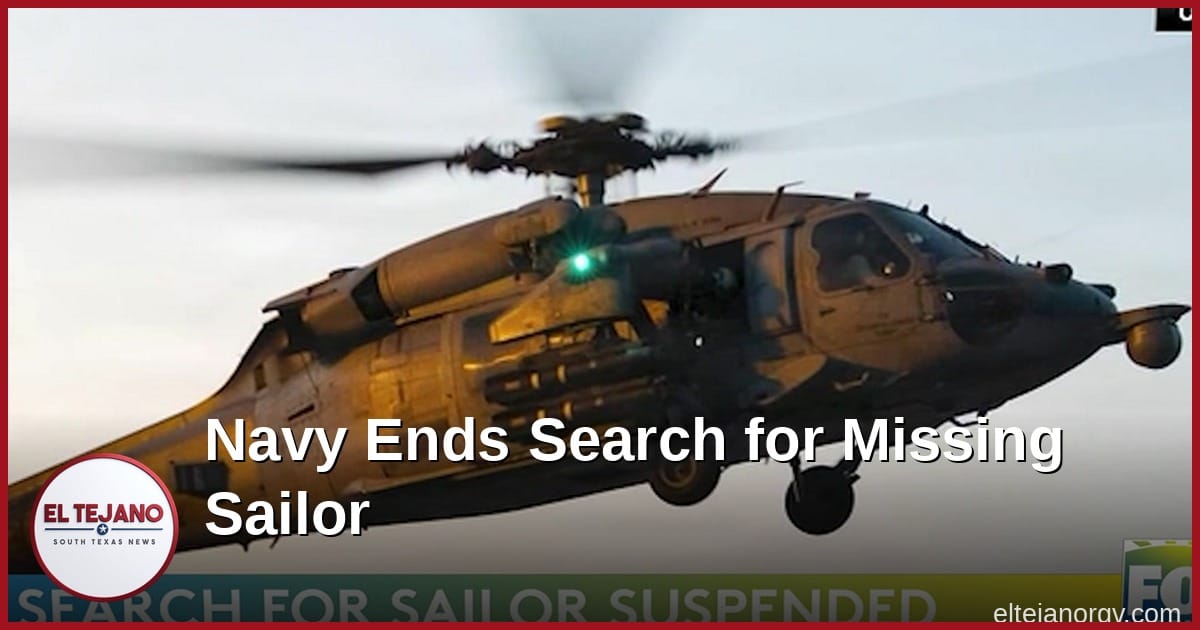
The U.S. Navy has called off its search for a missing sailor. A Navy helicopter went down in the Arabian Sea last week. The search lasted more than 102 hours. Crews checked over 14,000 square miles of open water. They found no sign of the sailor.
The crash happened last Wednesday, July 1. An MH-60S Sea Hawk helicopter made an emergency landing in the water. It happened at about 3:30 a.m. Eastern time. Four crew members were on board. Rescuers pulled three of them from the water. All three are in stable condition. The fourth sailor is still missing.
The Navy has not shared the missing sailor's name yet. Navy rules keep the name private. The name stays secret until 24 hours after the family gets the news. This rule gives the family time and privacy during a hard moment. It also stops rumors from spreading online before the family is ready.
Many South Texas families have sons and daughters serving on Navy ships. Those ships sail far from home for months at a time. Families here often go weeks without a phone call or a video chat. This crash is a hard reminder. Sailors face real risks at sea. That is true even when no enemy is involved. Search and rescue crews train for these moments, but the ocean is huge and unforgiving.
The helicopter flew as part of the air wing on the USS George H.W. Bush. An air wing is the group of planes and helicopters based on a carrier. The Bush left Norfolk, Virginia on March 31. It sailed around the tip of Africa. Then it moved into the Arabian Sea. The ship has worked in that area since late April. A carrier deployment like this one can last six months or longer, and sailors often miss birthdays, holidays, and school events back home.
The search brought together a big team. The Navy and the Air Force worked side by side. Helicopter crews flew off the Bush and off another carrier, the USS Abraham Lincoln. They flew search routes day and night. Five Navy warships helped scan the water below. Their names were the Ross, the Donald Cook, the Higgins, the Mason, and the John Finn. Two Navy P-8 planes joined the hunt too. Those planes are built to track targets across open ocean. Air Force planes also flew search missions. Crews used radar, cameras, and simple eyesight from the deck of each ship to scan the waves for any sign of the sailor.
The Navy says nothing points to an enemy attack. Investigators are still trying to learn what went wrong. The Navy has not shared new details about the cause since the crash happened. That part of the case remains open.
The MH-60S Sea Hawk is a busy helicopter for the Navy. Crews use it to rescue people, move supplies, and handle other jobs at sea. It usually flies with three to four people aboard. The carrier's helicopter squadron, nicknamed the "Nightdippers," flies this type of aircraft. That unit is based at Naval Station Norfolk in Virginia. The Navy has not said publicly which squadron's aircraft was involved in the crash.
The search officially ended Sunday, July 5. It stopped at 3 p.m. local time in the Middle East. About 50,000 U.S. troops now serve in the Middle East, according to U.S. Central Command. Almost half of all Navy ships at sea worldwide are working in that same region right now.
The crash investigation goes on. The Navy has not said when that review will wrap up. The three rescued sailors are still aboard the George H.W. Bush. The Navy has not released any word on new leads since the search ended, and it has not said whether it will share more details once the investigation is done.