
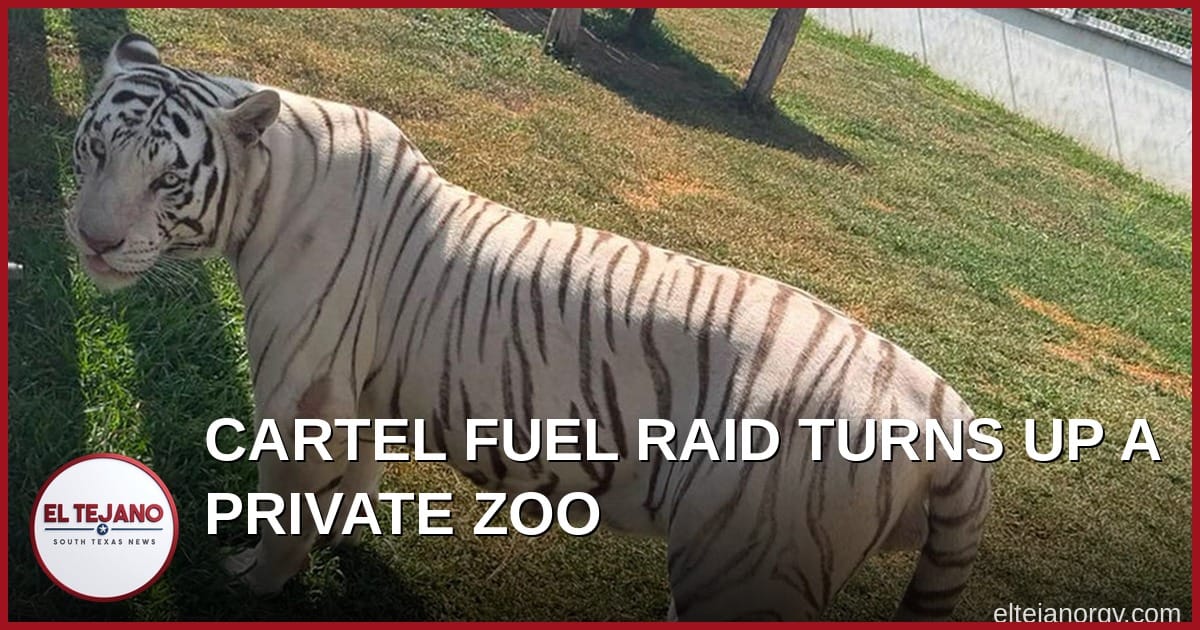
Mexican marines raided five properties in Tamaulipas hunting for stolen fuel. Instead, they walked into a private zoo.
The operation hit the Gulf Cartel where it makes some of its biggest money, fuel theft, known in Mexico as "huachicol." It also turned up something nobody expected: 135 exotic animals, some of them endangered, living on cartel land just a few hours south of the Texas border. The find shows how deep drug money runs in border state Tamaulipas, and how it buys more than guns and trucks.
Mexican Navy forces, working with federal prosecutors and state police, hit five properties in the cities of Tampico and Altamira on August 27. They searched a fuel storage center, an illegal gas station, a house, a workshop, and a ranch. All five, investigators say, tie back to the same criminal network.
At the ranch, agents found five Bengal tigers pacing in cages. They found three African lions, three jaguars, two hyenas, 21 spider monkeys, a camel, a sulcata tortoise, bison, buffalo, and a liger, a rare cross between a lion and a tiger. In total, officers counted 135 animals. Mexican wildlife officials say 35 of them count as endangered species under Mexican law, including the jaguars, the spider monkeys, and a green macaw.
The fuel side of the raid turned up 68,000 liters of diesel, close to 18,000 gallons. Agents also seized a tractor trailer, tanker trucks, firearms, radios, and tools cartel members use to tap into government pipelines and process stolen fuel for resale. One person was arrested at the scene and handed over to federal prosecutors for charges.
Mexico's security minister, Omar Garcia Harfuch, said the raid was part of a bigger push against the network behind it. "Our investigations continue to dismantle this network and affect its logistical and financial capabilities," he said.
Investigators tie the properties to the Gulf Cartel, one of the oldest and longest running criminal groups in Mexico. The cartel has run drugs and kidnapping rings along the Gulf Coast for decades, and in recent years fuel theft has become one of its top earners. The animals are now in the custody of Mexico's federal environmental protection agency, which will check their health before deciding where each one goes next.
Huachicol, the Mexican word for fuel theft, has grown into one of the biggest cash businesses cartels run, trailing only drug trafficking in some estimates. Gangs drill illegal taps into government pipelines, siphon off gasoline and diesel, and sell it cheap on the black market, often just miles from legal gas stations. Cartel bosses keeping private zoos is not new either. Drug lords across Latin America have long stocked exotic animals on their ranches as a show of wealth and power, a tradition that stretches back decades, from Pablo Escobar's famous hippos in Colombia to smaller private collections busted at cartel properties across Mexico over the years.
For South Texas, the raid is a reminder of how close cartel operations sit to the border. Tamaulipas shares its northern edge with Texas, and fuel theft networks there often move product and money through crossings used every day by legal trade and travelers. The same roads and pipelines that carry gasoline legally have long been targets for cartel taps.
The investigation stays open, and Mexican officials have not said whether more arrests are coming. The animals will remain under government care while wildlife officials work out long term placement, likely at zoos or sanctuaries built to handle big cats and other large species. The raid adds to a string of hits Mexican forces have made this year against huachicol networks along the Tamaulipas coast, though the Gulf Cartel has kept operating there despite the pressure.