
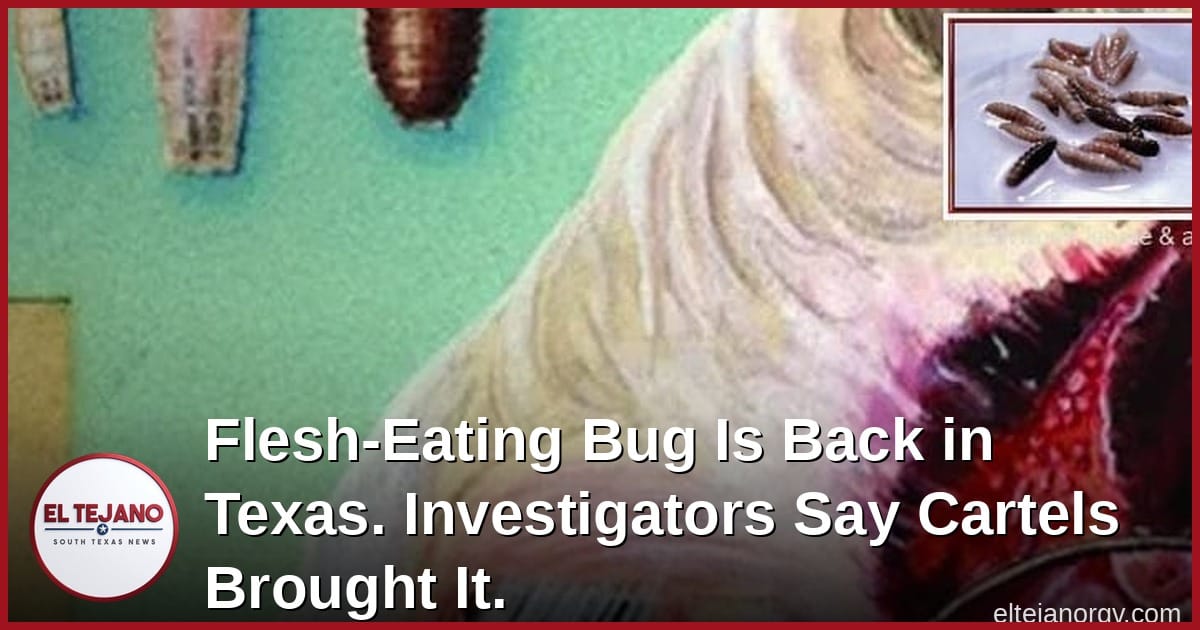
A flesh-eating bug that was wiped out in the US more than 60 years ago is back. It is in Texas right now. And investigators say it got here through cattle that criminal groups smuggled across the border.
The New World screwworm is not a dirt worm. It is the larva of a fly. The fly lays eggs in open wounds on cattle, deer, dogs, goats, and other warm-blooded animals. The larvae hatch and eat living flesh. The wounds get bigger fast. The animal can die. In rare cases, it can infect people too.
Texas had not seen this bug since the 1960s. Federal workers spent years killing it off by dropping sterile male flies from planes. When a female screwworm mates with a sterile male, she cannot have babies. That plan worked. The bug was gone from the US and kept contained at the tip of Panama for decades.
But now it is back.
As of June 14, there are 12 confirmed cases in the US: 11 in Texas and one in New Mexico. The first case was found in a calf in Zavala County, deep in South Texas. Since then, cases have turned up in La Salle, Gillespie, and Sutton counties. One infected dog was found in Lea County, New Mexico. The dog had never traveled to Texas or Mexico. That worried officials a lot.
Gov. Greg Abbott declared a disaster for all 254 Texas counties. State and federal workers are now working to stop it from spreading.
How did it get here?
Investigators say criminal cartels move about 800,000 cattle a year from Central America into Mexico. They use fake ear tags and false vet papers to get past checkpoints. The screwworm started spreading in Central America in 2021. It showed up in Mexico in November 2024. Then it crossed into Texas.
The same routes cartels use to smuggle cattle are how the parasite got north.
Cartel groups run a big illegal cattle business. They bring in animals and give them fake papers. Then they mix them into regular cattle sales. One report put the money at about $320 million a year. Once those animals are in the system, it is hard to track them. You cannot tell where they went or what they brought with them.
The US shut down all live cattle imports from Mexico after the Texas cases were confirmed. But Mexico quickly shifted to selling more processed beef instead, up 23 percent in the first four months of 2026. Cattle that once would have crossed alive into US feedlots now comes back as cut meat.
Texas leads the US in cattle. The US cattle herd is at its smallest in 75 years. A bad outbreak could hurt the food supply and drive up beef prices for families across the country.
Scientists are also worried about Texas deer. There are millions of white-tailed deer in the state. The screwworm can spread from deer to cattle and back. Wild animals cannot be treated as easily as farm animals.
Officials are fighting back. The USDA is dropping millions of sterile male flies over areas where cases were found. A $750 million factory is being built at Moore Air Base near Edinburg. It will make sterile flies. When it is done, it can produce up to 100 million sterile flies a week. Workers are also setting up 12-mile quarantine zones around each case. Animals inside those zones cannot be moved.
Across Mexico and Central America, more than 171,700 animals have been infected. Over 2,070 people have been infected too. Officials say the real number is higher. Many cases never get reported.
Ranchers in Texas are being told to check their animals every single day. Look for wounds that smell bad, have discharge, or have larvae moving inside them. If you see it, call your vet right away. Early treatment saves animals. Waiting can cost you the animal.
Some farms have already used a drug called doramectin to protect their cattle. Vets say it helps but is not a full fix.
The threat is here. Cases are still rising. Officers are still looking into how the bug crossed the border.
If you have cattle, goats, sheep, or dogs in South Texas, check them daily. Call the Texas Animal Health Commission at 1-800-550-8242 if you see anything wrong.