
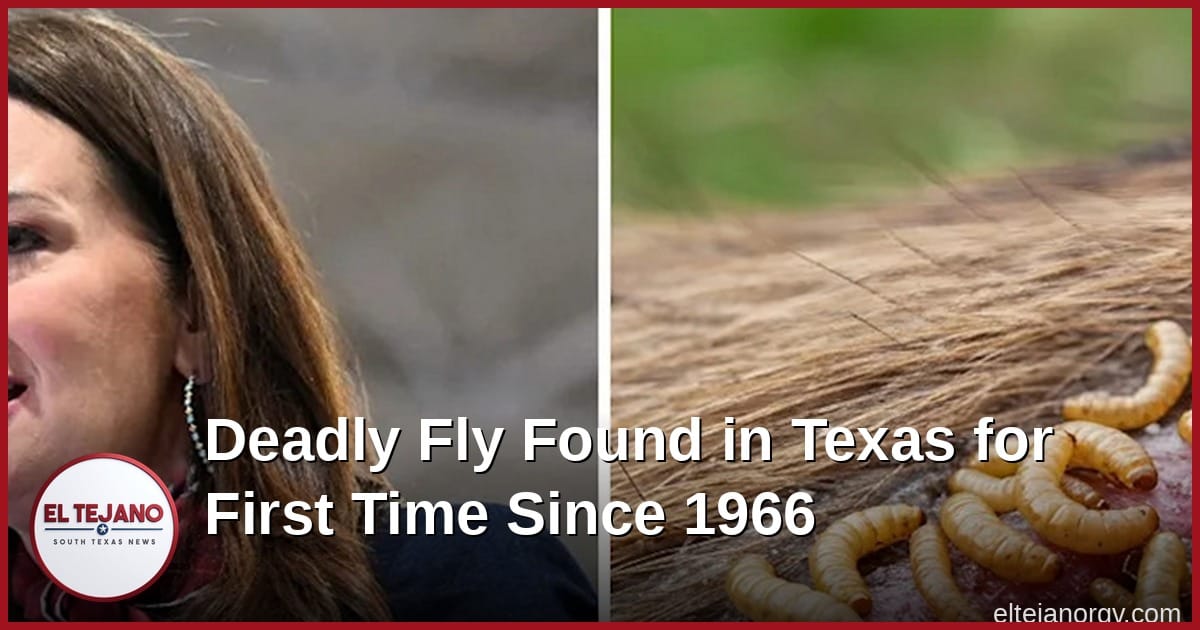
A fly that can kill cattle, pets, and people turned up in South Texas this month. It had not been seen here in 60 years.
The New World screwworm fly was found in La Pryor, a small town in Zavala County. La Pryor sits about 30 miles from the Mexican border. The town has about 1,200 people. U.S. Agriculture Secretary Brooke Rollins confirmed the find.
As of this week, Texas has 19 confirmed cases. The quarantine zone is growing.
This fly is not like a normal housefly. It finds open wounds on animals or people. It lays hundreds of eggs inside the wound. The eggs hatch into larvae. The larvae eat living flesh. They do not stay on top. They dig deeper and deeper into the flesh. There is no drug that kills them. A doctor has to cut them out. If no one does, the host dies.
Texas Agriculture Commissioner Sid Miller said the federal response has been too slow. "Slow, bureaucratic and incomplete," he called it. He said it would take "years to fully implement" the current plan. He asked President Trump to "throw every available federal resource at this threat."
The federal government has a plan. The USDA is releasing sterile male flies near the Mexican border. Female screwworm flies only mate once. If a female mates with a sterile male, she never produces offspring. This cuts the population over time. But it takes time to work.
The screwworm was wiped out here in 1966. It took decades of hard work. Now people fear it is back for good if the outbreak is not stopped.
The first Texas case was found in a 3-week-old calf. Before that, a February case turned up in a horse that had come from Argentina. That was found before the Texas outbreak began.
This is not only a Texas problem. Mexico now has screwworm cases as close as 25 miles from the U.S. border.
There was one human case in the U.S. in recent memory. A woman who had traveled to El Salvador tested positive when she returned. That was last year. There is no confirmed outbreak in humans in the U.S. right now.
The screwworm poses the biggest risk to livestock. Cattle ranchers in South Texas and the Rio Grande Valley depend on their herds. A screwworm outbreak could cost them their animals and their income.
Ranchers should check their cattle every few days. Look at fresh cuts, birth wounds, and tick bites. Those are the spots the fly targets. Call a vet fast if a wound looks worse or has larvae in it.
The quarantine zone in Zavala County is expanding. Federal and state officials are working together, though Commissioner Miller made clear he does not think the effort is moving fast enough.
Watch for updates from the Texas Department of Agriculture and the USDA as this situation changes.
The sterile insect technique has worked before. Scientists used it to wipe out screwworm in the U.S. by 1966. They used it again in Mexico, Central America, and parts of South America. The process takes years. Planes drop millions of sterile male flies over a wide area. The wild females mate with them and produce nothing. Over time, the population crashes.
But the flies can come back. Any break in the sterile fly program can let the wild population recover. That is part of why Commissioner Miller is so worried. He says the current program is not moving fast enough to stop what is coming from Mexico.
South Texas ranchers have dealt with screwworm before. Older generations remember it well. It was a real fear every calving season. Flies would find fresh birth wounds in minutes. A calf could die in days if no one caught it.
If you have livestock, call the Texas Animal Health Commission if you see signs of screwworm. Call your local USDA office too. Quick reports could stop this from spreading.
This situation is moving fast. Check the Texas Department of Agriculture and USDA websites for updates.
All facts in this story come from federal officials and published news reports.