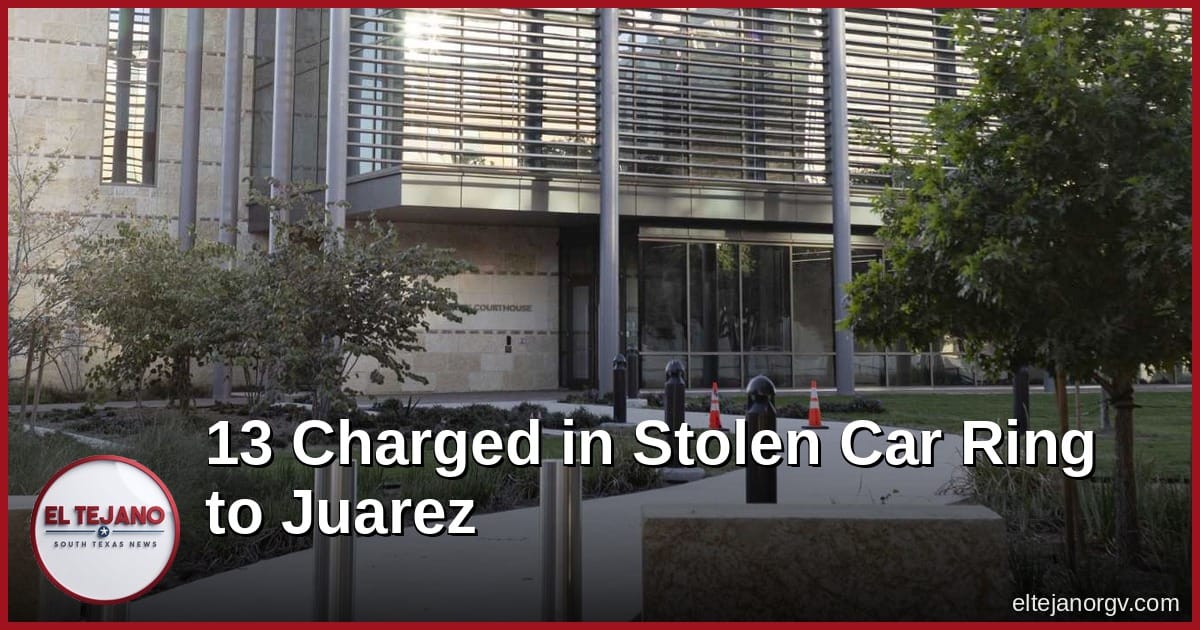
U.S. officials in El Paso say 13 people helped move stolen cars into Mexico. They say the cars were for cartels. They shared the case at a news conference on Monday, Oct. 26.
U.S. Attorney Justin R. Simmons said the case began in the spring. Agents saw a trend. Stolen cars were coming to El Paso from all over the country. Some belonged to private owners. Some belonged to rental car firms. Then the cars went into Mexico.
Simmons said cartels hired U.S. citizens and others who can cross the border.
At least 13 people were indicted and arrested between March 25 and Oct. 19. An indictment is a formal charge from a grand jury. Court records show three charges. One is a plan to move stolen property across state lines. One is the act of moving it. One is aiding and abetting. That means helping someone else commit a crime. Eleven of the people charged are U.S. citizens. Two are Mexican nationals.
Agents got back 29 vehicles. They are worth more than $1.1 million. Officials say the cars were stolen in cities like El Paso and Chicago. Others came from states from Florida to California. The cars crossed at El Paso ports of entry into Juarez. Officials say the La Linea and Sinaloa cartels used them.
Officials say this is more than car theft. Vance Belyeu of Homeland Security Investigations said, "These are not isolated property crimes." Simmons said cartels use the cars in killings. He said they also use them to smuggle people, even children. Some people are held in stash houses, he said. Those are homes where people are hidden. He said some are in U.S. neighborhoods, including El Paso. Simmons said the cars also help move guns into Mexico and drugs into the U.S. Officials stood by photos of stolen cars with bullet holes.
Coult W. Markovsky of the FBI in El Paso said car theft hurts everyone. Owners lose their cars. Insurance costs rise. Rental car firms raise their fees. "We all pay," he said.
Simmons also spoke of a possible extra charge. The U.S. named Mexican cartels foreign terror groups in February 2025. Officials say helping one of them can bring 10 years in federal prison. Simmons said prosecutors will seek that charge if they can prove it.
Everyone is presumed innocent until proved otherwise.